01 / EXPOSURE
Equipment & risk review
Identify the appliances, HVAC controls, communications, entertainment systems, smart devices, and backup-power components the home depends on.
Whole-home surge protection designed to reduce the risk that damaging voltage spikes reach appliances, HVAC controls, connected electronics, and backup-power equipment.
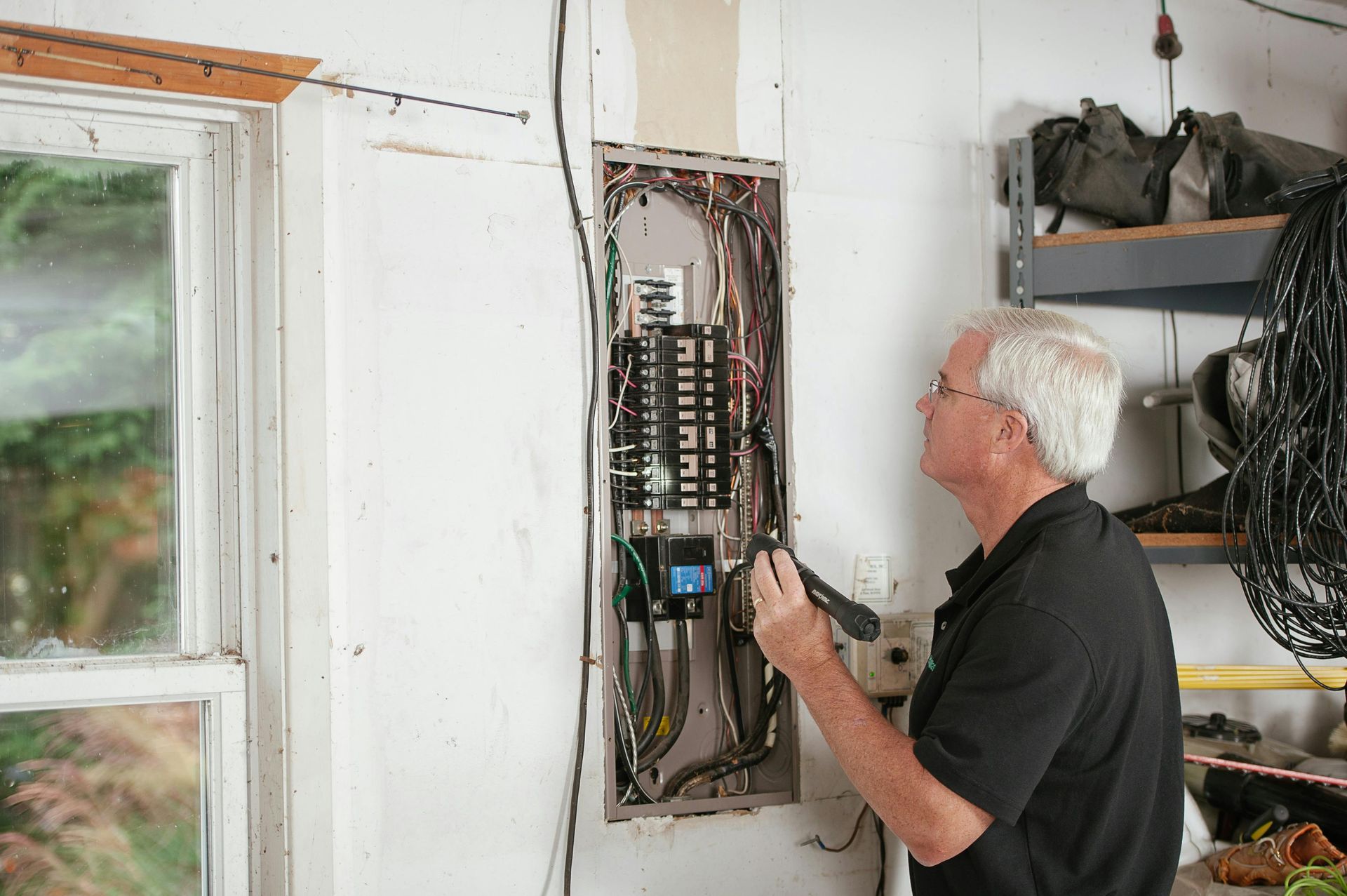
Panel-installed protection is strongest when it is selected for the actual electrical system, coordinated with grounding and backup power, and combined with added protection where sensitive equipment needs it.
Identify the appliances, HVAC controls, communications, entertainment systems, smart devices, and backup-power components the home depends on.
Review the panel arrangement, available connection method, service characteristics, accessible condition, and any constraints affecting installation.
Match the proposed surge protective device to the electrical system, installation location, application, and manufacturer requirements.
Consider the grounding and bonding conditions that influence how transient energy is directed away from connected equipment.
Account for standby-generator and transfer-equipment arrangements so surge protection is planned within the home’s actual power system.
Review indicator status, documentation, replacement conditions, and the appropriate inspection approach after a significant event or system change.
A whole-home device provides broad panel-level defense, but sensitive equipment may still benefit from coordinated point-of-use protection. The full strategy considers how surges enter, travel, and reach the electronics inside modern systems.
Discuss the property, sensitive equipment, storm and outage concerns, panel configuration, generator equipment, and prior electrical issues.
Define the proposed panel-level device, connection approach, applicable downstream protection, and any conditions that need attention first.
Complete the approved installation using the selected equipment and the connection arrangement appropriate to the evaluated system.
Confirm device status, review indicator behavior and limitations, record the installed protection, and explain when follow-up is appropriate.